
Anyone with even a few hours of experience will know the best starting point for any strategic project is “today” - what is the current situation, context, landscape, pressures, challenges, measures, etc.
Where are we right now?
Before we can figure out where we want to be next - we need to understand the starting point.
But I can’t be the only person here who, when throwing myself into an organisation, its context, its people, its product, its culture, its audience - you realise the problem they want you to solve, is the not the problem they need to solve.
The difference between want and need can often be vast.
Even the most light-touch of discovery, from an external and impartial perspective, can uncover some systemic and major issues that are the real problem that needs tackling - not the problem you’ve been asked to solve, or worse, the outcome or output they’re already leaning towards, is never going to work, because of the bigger/different issue.
“We need more visitors to our website” (but the website isn’t clear once they land there).
“We need a clearer tone of voice” (but the story they need to tell isn’t defined).
“We need to engage with our audience” (but their audience isn’t clear).
Strategy goes all the way up - and depending on where you’re starting, I find there’s all too often a ‘gap above’. So we end up asking more questions, perhaps questions slightly outside of the scope of the project. Sometimes clients get frustrated — why are you asking about that?
Do we tell them the bigger problem needs tackling first - and risk this project being put on hold or going away? Do we try and solve the bigger problem through our work - and risk massive scope creep and extended responsibility? Do we draw a line, and accept the boundaries of the project we’ve got, but realise our outputs will never create the impact they want - and worry how that’ll reflect upon us?
In many ways, being independent is the perfect positioning to have these harder conversations with clients. But being the grit in the oyster can be tough too.
I think most of us do what we do independently, because we are passionate about doing good work. It matters to us.
But if we’re asked to work on the wrong problem - which hat do we wear, which approach do we take? Purist or pragmatic? Helpful or obstructive? Do the best job or the right job or the commissioned job?

Nikita Walia is a New York-based brand strategist, marketer, speaker and writer. She specializes in using cultural trends, semiotics and media theory to make sense of the now and build brands for the future. She is currently leading strategy at U.N.N.A.M.E.D. and writes regularly on her substack Thinking Out Loud
Q. Nikita - tell us a little bit about your work - a career path which has spanned six years of independent work and more recently, a return to full-time. What prompted that transition?
I spent six years running my own studio. Prior to that, I held a variety of strategy roles at boutique social media agencies, branding and eCommerce-focused shops, and a mid-size global creative agency.
When I started freelancing, the work began as social-first consulting. Pretty soon it became clear that my POV was singular, and clients began requesting I build a team to implement the strategies that I was suggesting. Quickly from social we scaled into full brand-to-market work—naming, messaging, go-to-market strategy, full-scale campaign development. The business was doing well, but I found myself drifting away from the parts of the work I cared about most: ideas, language, meaning. I was so deep in operations and business development that I rarely had space to think.
That tension kept surfacing, especially once our studio became known for inheriting brand work from agencies that hadn’t considered the strategy in the context of going to market. I kept thinking: why am I always fixing this instead of setting the direction in the first place?
Eventually, I hit a point where I wasn’t sure I wanted to keep growing the business just because I could. The work was better than ever, but I wasn’t enjoying it in the same way. I didn’t want to build a 20-person agency. I didn’t want to stay trapped in a founder identity. So I made a list of what I actually wanted: intellectual rigor, creative autonomy, clients I could sink my teeth into, equity in outcomes, and the chance to build something with people, not alone. That’s when I got a message from a studio with founders I knew of and admired, inviting me to join as their first strategy hire. It felt like a full-circle moment—but also like a door opening toward the kind of work I’ve always wanted to do.
Q. There seems to have been an explosion in strategists writing regularly and producing more social content in the last year - what do you think is behind this, is social visibility and "show your thinking" essential for a modern strategist?
I think the pressure to “show your thinking” comes from a few different places: the way jobs are found now, the flattening of media into performance, and the deep desire for a bit of control over how we’re perceived. But I also think there’s something else going on: a hunger to be seen as a thinker, not just as a deck-maker or service provider. That’s the good part.
The hard part is that social platforms reward a particular kind of thinking—fast, confident, certain. And strategy doesn’t always look like that. Sometimes the best insight is quiet or ambiguous or still in progress. So when everyone’s writing more, it’s important to ask: are you writing to clarify your thinking, or just to prove you have some? I don’t think we need more “5 fast tips for doing XYZ” articles.
I don’t believe visibility is mandatory, but a point of view is. Having a voice—knowing how you think, what you notice, what you want to be known for—is essential. Whether that shows up in your writing, your interviews, or your decks is up to you.
3. You’ve been writing Thinking Out Loud since 2020, and it seems to have evolved from occasional essays into a more dedicated practice - why is writing important to you, and what have you discovered as you've developed your writing over the last five years?
Writing is where I metabolize the world. When I was running my studio, writing helped me stay connected to the work itself—to meaning-making, not just management. And now that I’m in a strategic leadership role, it’s become even more central. I’m not reacting to client needs, operational fires, you name it 24/7. I can actually sit with an idea for weeks or months before publishing.
Over the years, Thinking Out Loud has shifted from commentary to something closer to criticism. I’m less interested in posting takes and more interested in building a body of work. I want to write pieces that last longer than the news cycle. That’s why I started experimenting with long-form formats and limited releases. It’s a rejection of the idea that ideas have to be disposable to be relevant.
Writing also helps me notice. I’ve always believed that the best strategists are also cultural critics, in the truest sense of the word—people who observe how meaning moves. My newsletter is the space where I get to do that on my own terms. The TL;DR is, the goal is to post ~1, maybe 2 long-form essays a month, a weekly link aggregation, and a weekly interview.
4. You’ve recently started experimenting with “friction” in how your writing gets released. What’s behind that shift?
I’ve spent years in an industry obsessed with scale: more engagement, more eyeballs, more output. But with Optimized to Death, I wanted to see what would happen if I made it harder to access. No instant download, no open link. People had to request it, wait, and actually read 4,000 words. And still, over 80% of the essays were claimed before the teaser went live, and all 250 copies were claimed within 24 hours.
It made me realize something: slower signals carry more weight. When someone fills out a form, waits for you to email them, and still follows through to read it, that’s not passive consumption, it’s intentional engagement. That friction actually increased the meaning of the interaction.
I’ve been talking to clients about this too. Especially in creative and cultural work, friction can be a tool. It’s not about making things harder just for the sake of it—it’s about protecting the integrity of the experience. If everything is optimized for ease, nothing feels sacred. Sometimes, slowing down is the most generous thing you can do.
5. What’s next for Thinking Out Loud? What do you want to explore this year?
I want to keep writing slowly. There’s enough commentary in the world already. I’m more interested in questions that require patience: I have a list of topics I want to write about that I’m digesting. I want to keep exploring rigorous thinking, offer new frameworks, and help people see things differently with ideas that feel hard to shake.
I’ll also keep doing the In Practice interview series, which surfaces how brand thinkers actually work, not just what their portfolio looks like. It’s one of the few places where I get to ask the kinds of questions I’d want to answer myself. And there will always be the occasional piece on a cultural flashpoint—like my NikeSKIMS breakdown or the TikTok Oracle essay—but those come when they’re ready, not on demand.
My hope is that the newsletter keeps evolving with me. If I’m thinking deeply, it’ll show. If I’m rushing, it’ll show too. So the goal is to stay honest, keep noticing, and publish when it matters—not just when it performs. It’s not easy to strip yourself of the metrics oriented impulse but damn, am I trying!
6. Who are some independent strategists or writers you’re enjoying right now?
So many.
Christina Monroe, my collaborator and co-writer. She has a kind of calm precision I really admire. Our media diets overlap just enough to spark something, but she always brings in references I wouldn’t have found on my own. I leave every conversation feeling sharper.
Ochuko Okpovbovbo, who writes about culture from a Gen Z lens with so much wit and clarity. She’s not an agency strategist, which honestly makes her thinking more fun—there’s no framework, no industry speak, just real curiosity and a strong point of view.
Nick Susi, whose writing feels like warm tea but with just the exact amount of lemon. He has this quiet way of landing on a sentence that sticks with you. His pacing, his tone, the way he frames ideas—it’s completely his own.
Elliot Vredenburg, a creative director I am lucky enough to partner with at work! He has an educational background in aesthetics and politics, and you can feel that in how he sees the world. His design thinking is informed, layered, and always interesting to debate. (Sorry for the self-promo, but we’re giving a REALLY fun talk in June together.)
Tony Wang, who runs The Office of Applied Strategy. He once made a research dossier you could only access in person, and it totally shifted how I think about publishing. Every time we talk, I walk away with so much inspiration and clarity.
» DAIVID and Effie have released a report on creative themes in effective marketing, based upon their data and AI understanding of human reactions
» Meta have published a set of insights on Gen Z which might kill things like the funnel and demographs once and for all.
» (becoming a regular?) has dropped The Solitude Generation this week, exploring Gen Z and isolation.

» have published the first chapter of a parallel exploration of the ‘Quarantine Cohort’, with similar topics being unpacked.
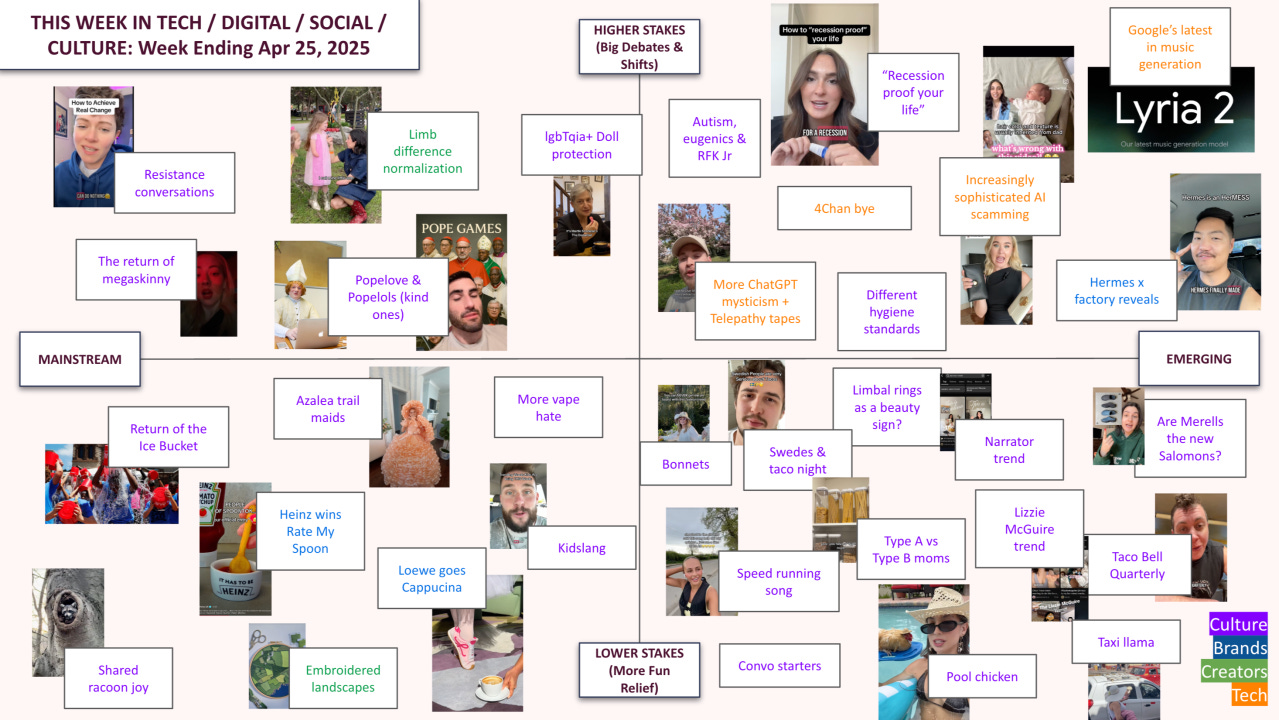
» ’s weekly newsletter is packed full of goodies.
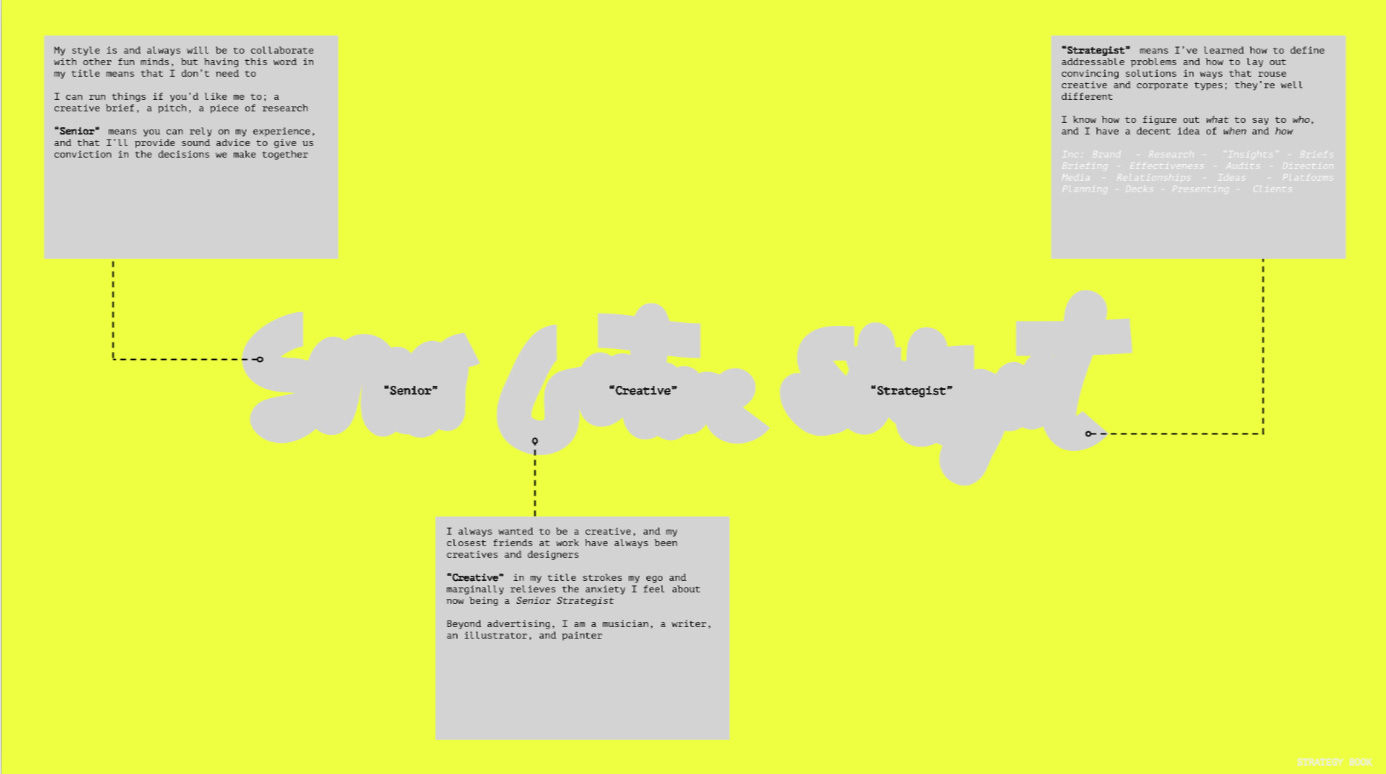
» Asa Nowers concise 110 slides on being concise as a superpower.
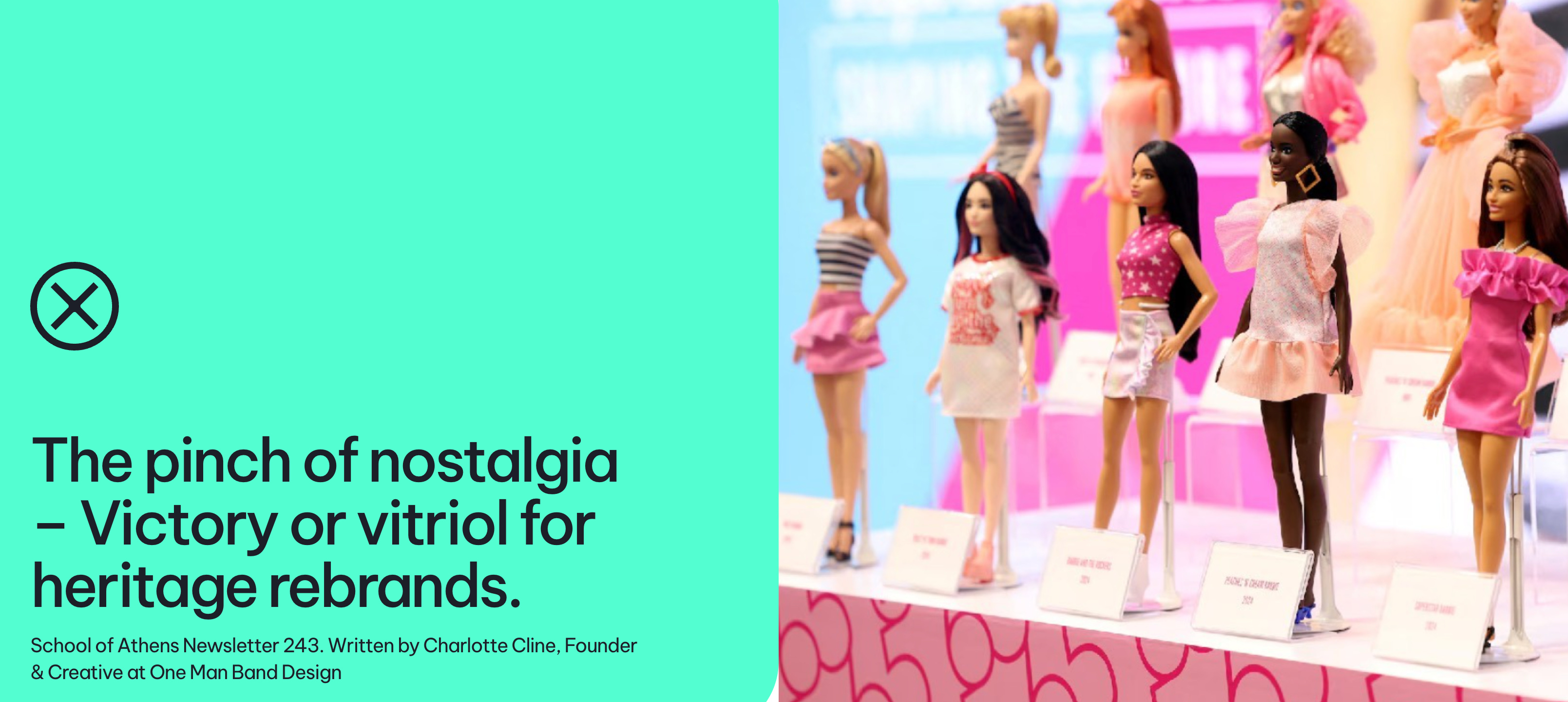
» Charlotte Cline on heritage rebrands for Been There Done That
» The blissful zen of a good side project (thanks Nick)
» Taste as the final human differentiator
» ‘Share of model’ as new metric
» Sunk cost fallacy and careers
» Loving this work from The Place Bureau
» What makes the perfect brief - a comment thread
Wanna share your work, ideas or thinking with the community? - drop me a message, and I’ll pop it in the next issue. This is a scrapbook of our ideas, so please open up your brains.
Each week, I’ll try to profile one of our members, so you get to know each other better, and find folk you might want to connect to. Shout if you fancy having your face here.
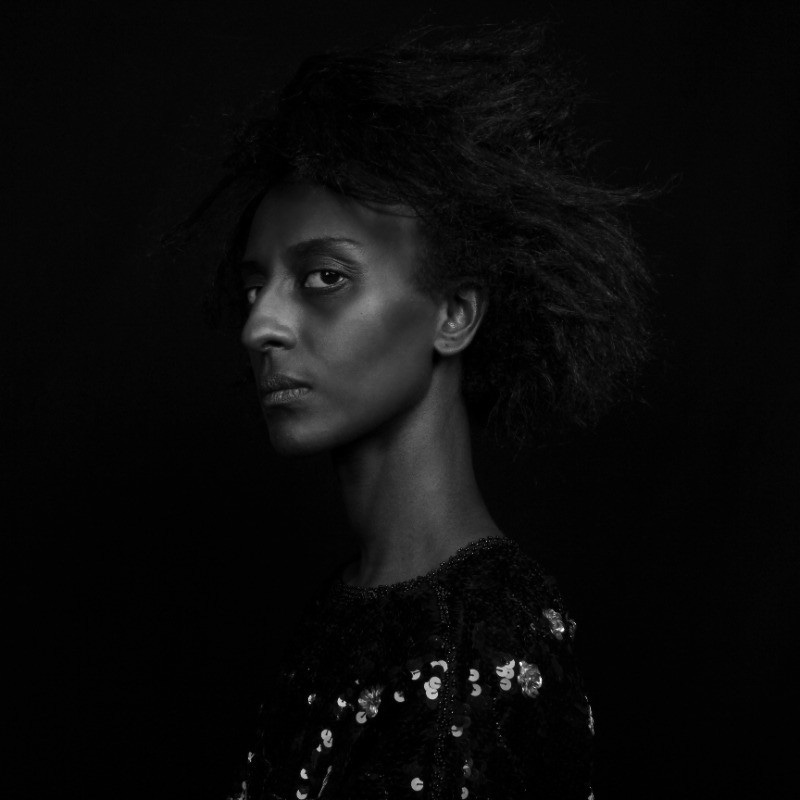
👋 Hey everyone, I’m Mebrak Tareke
I am British-Eritrean, a Londoner. Now based between NYC and Mexico City. I am the principal at TIMS, a global cultural strategy and storytelling consultancy. I offer advisory, strategy and narrative storytelling services to luxury, financial, tech brands with a vested interest in art and social impact. I also micro blog about art, technology, politics and culture. I am currently developing an art-tech app idea for the global African diaspora. I have been working as a brand marketing, cultural strategist for well over 12 years and in narrative storytelling for 20 + years.
I am proud that I started to do the groundwork for the research and development phase of AFA, my art tech app idea for the global African diaspora. I am proud of the strategic/advisory work I did with a handful of SMEs in the art, design and impact space in NYC and Mexico City. I am proud of a book on the history of art collectors I managed as a lead storyteller and editor in both English and French. And the brain trust of peers, mentors and mentees that I have built and leveraged into meaningful collaborators over the past year.
I am looking to work with more long-term clients in the luxury, tech, financial sectors in a fractional capacity, helping them unlock the power of art and social impact to catalyze business, systemic and innovation growth. I would also like to lean in more to cultural strategy and to productize my work into clinics, audits, workshops, as well as advisory sessions as bite, snack and meal sized offerings.
Things I’m loving at the moment:
Reading - Reading Calvin Tomkins at the New Yorker.
Listening - What Now? by Trevor Noah (it´s hilarious).
Doing - Getting the hang of Reformer Pilates.
Say hello to Mebrak on LinkedIn, or via the community.
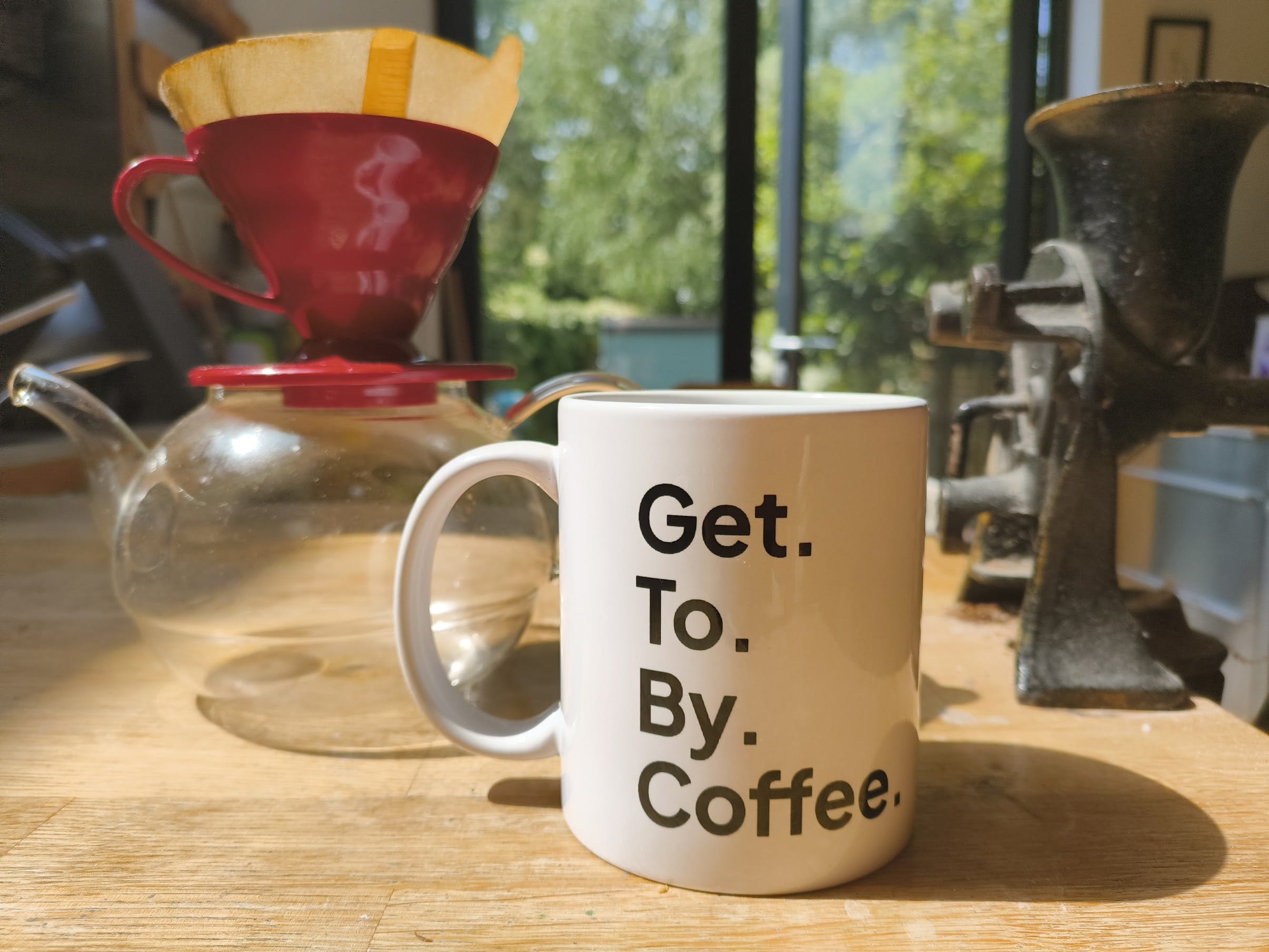
I’ve been at home, innit. For like, a month. Cuz I can’t really leave the house at the moment for long periods of time. Meh. And I’ve been told I need to avoid the caffeine. Double meh. So, this week, my coffee cup is filled with beans from the lovely folk at Craft Decaf, who have very kindly given us a 25% discount on any products. They’re a lovely independent roasters, plus they curate brilliant decafs from other UK roasters.
» Get 25% off orders via Craft Decaf ☕️
Please send photos of the coffee from where you’re working. I will enjoy caffeine-by-proxy.
I need introducing to businesses who hire freelance strategy people - so I can keep the flow of briefs coming. If you’re up for introducing me to someone who leads a strategy team or business who hires strategy people, please connect me!
Feel free to CC me any time: [email protected]
senior brand strategist with health exp (remote,US)
https://outsideperspective.co/gigs/20250501-rastro.html
Senior Brand Strategist with FMCG exp (UK)
https://outsideperspective.co/gigs/20250501-fmcg.html
Digital Strategy for platform rebuild (US)
https://outsideperspective.co/gigs/20250429-siberia.html
Freelance Sr. Creative Strategists with love for sports - mat cover (NYC,USA)
https://outsideperspective.co/gigs/20250429-nba.html
Media Strategist (EU)
https://outsideperspective.co/gigs/20250429-littlevoice-strategist.html
Media Planner (EU)
https://outsideperspective.co/gigs/20250429-little-voice-planner.html
Account Strategist (Content & SEO) (UK)
https://outsideperspective.co/gigs/20250429-grizzle.html
Data Planner Freelancer (UK)
https://outsideperspective.co/gigs/20250429-data-planner.html
Freelance YouTube Strategist/Channel Manager (UK)
https://outsideperspective.co/gigs/20250428-video.html
Freelance Strategist, public sector (Singapore)
https://outsideperspective.co/gigs/20250428-rga.html
Strategist with experience with the UAE market (UK)
https://outsideperspective.co/gigs/20250428-lucinda.html
Executive Creative Director/Lead Strategist (UK)
https://outsideperspective.co/gigs/20250428-lead-strategist.html
That’s all for this week.
mk✌️
Get our Community Edition delivered to your inbox every week.